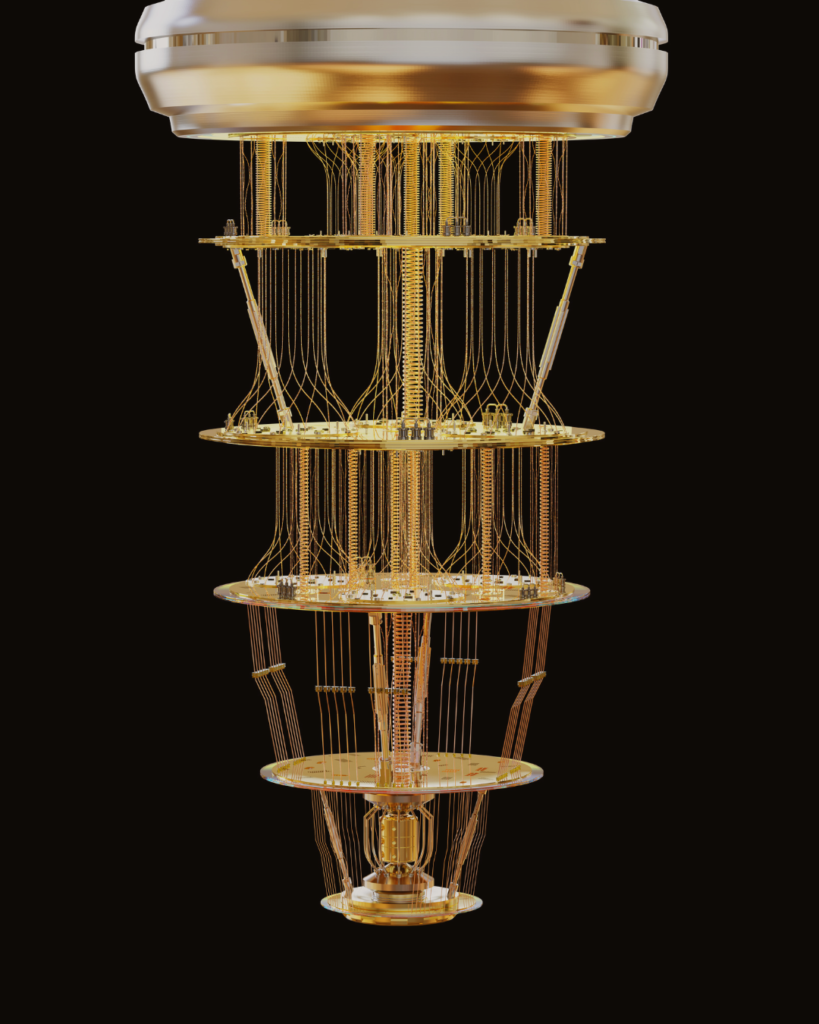
Quantum computing is not just a physics problem. It is a computer science challenge. While quantum computing is often introduced through physics, many of the key challenges are computational: algorithms, software, and reliability. Explore the intersection of quantum and computer science here.
Quantum computing in brief
A classical computer processes information as bits: 0 or 1. A quantum computer processes information as qubits, which – thanks to a property called superposition – can represent 0, 1, or a combination of both at once. Qubits can also be entangled, meaning the state of one qubit is linked to another, even when physically separated. Combined, these properties let a quantum computer explore many possible answers to a problem simultaneously, rather than one at a time.
If quantum computing works, what could change?
Discover: New medicines and materials by modelling systems beyond the practical reach of today’s computers.
Optimise: Explore new ways of tackling complex problems in energy, logistics and industry.
Learn: Investigate whether quantum computation can create new capabilities in AI and machine learning.
Secure: Redesign parts of our digital security infrastructure for a post-quantum world.
Compute: Expand the boundaries of which problems we can realistically solve with computers.
The intersection of quantum and computer science
But none of this happens automatically. Before quantum computing can deliver useful applications at scale, fundamental challenges in algorithms, software, error correction, architecture and security need to be solved. That is where computer science comes in.
Quantum Computing Talks
Quantum computing meets computer science
DIREC has received funding for a project to strengthen computer scientists working with algorithms for quantum computing. The project will feature two seasons of recorded lectures by leading experts, covering key topics at the intersection of quantum computing and computer science. Each lecture will be accompanied by curated reading lists and open research challenges, making the content accessible to researchers, educators, and industry professionals alike.
Quantum computers have the potential to solve certain tasks that would take millennia to complete even with the fastest (conventional) supercomputer. However, while impressive accomplishments can be observed in the physical realization of quantum computers, the development of automated methods and software tools that provide assistance in the design and realization of applications for those devices is at risk of not being able to keep up with this development anymore.