Quantum computing Lecture series

Quantum computing is not just a physics problem.  It is a computer science challenge.

Start here. Explore. Go deeper.

Start here

Quantum computing is often introduced through physics But many of the key challenges are computational: algorithms, software, and reliability. This series helps computer scientists enter the field.

Explore the entry points into quantum computing

Quantum Algorithms and Complexity Theory

Focus on quantum algorithms, complexity classes (BQP, QMA), quantum supremacy, and the theoretical limits of quantum computers.

Quantum Machine Learning

Focus on how quantum computing can accelerate or improve machine learning, as well as the intersection between QML and classical ML.

Quantum Software and Programming Languages

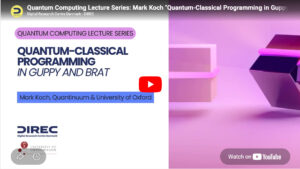
Focus on programming languages, compilers, software tools, formal verification, and the development of software for quantum computers.

Quantum Cryptography and Communication

Focus on Quabtum Key Distribution (QKD), quantum networks, and post-quantum cryptography.

Quantum Hardware, Error Correction, and Architecture

Focus on hardware architectures, fault tolerance, quantum error correction, and how computer science can contribute to stable and scalable quantum systems.

From lectures to research

This series is not only about learning – but about engaging with the field. We highlight research directions where computer scientists can contribute

Explore the talks

Robin Kaarsgaard Sales, University of Southern Denmark
David Aasen, Microsoft Station Q

Matthias Christandl, University of Copenhagen
Help shape the series

We are identifying the next speakers and topics. Your input matters.
Send suggestions to us: