DIREC project

Threshold Key Management in the Post-Quantum Era: Quantum-Secure Cryptography

Project impact

At its core, classical cryptography is about the secure management of secret keys. Its security depends entirely on keeping a strong private key hidden from adversaries while ensuring that authorized users can access it when needed. But what happens when quantum computers, with their immense computational power, threaten to break the foundations of classical cryptography?

In the quantum era, computers will be able to solve mathematical problems far more efficiently than today. This makes post-quantum cryptography (PQC) an urgent necessity. The challenge lies in making these new PQC techniques as practical and seamless as existing cryptographic systems.

This is where the project begins. Threshold-based key management, in which cryptographic keys are shared among multiple parties, must be adapted to withstand the coming quantum reality.

In collaboration with Aarhus University (AU) and the Danish-led company Blockdaemon, the project aims to ensure that governments, banks, and critical infrastructure can operate securely when the quantum era arrives.

PROJECT DATA

Project name

Threshold Key Management in the Post-Quantum Era

Project period
2025-2027
Funding
DKK 2.000.000

Scientific mission

The project is structured around three main research tracks.First, a baseline will be established through feasibility studies and performance benchmarks, building on AU’s strong tradition in classical cryptography.

Next, the project will define protocols for joint digital signatures, enabling multiple parties to sign collectively. The approach relies on lattice-based cryptography, a method believed to be resistant even to future quantum attacks.

Using the MPC-in-the-Head paradigm, the team will design an offline, shareable signature scheme that can be efficiently tested and refined. The resulting zero-knowledge proof must ultimately be made compact and efficient enough to be verified using standard tools in real-world commercial systems.

Finally, the developed protocols and security analyses will be translated into working prototypes, which Blockdaemon will integrate into its systems. The goal is to enable enterprise clients to migrate to threshold-based key management that remains secure well into the quantum future.

Project Participants

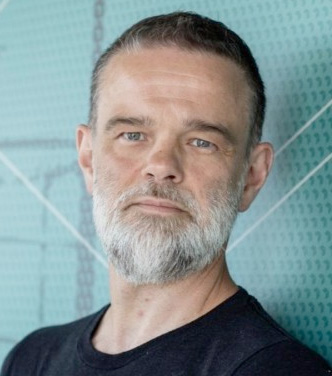
Claudio Orlandi
Claudio Orlandi – Professor – Aarhus University
👤
Sebastian Kolby – Post Doc – Aarhus University
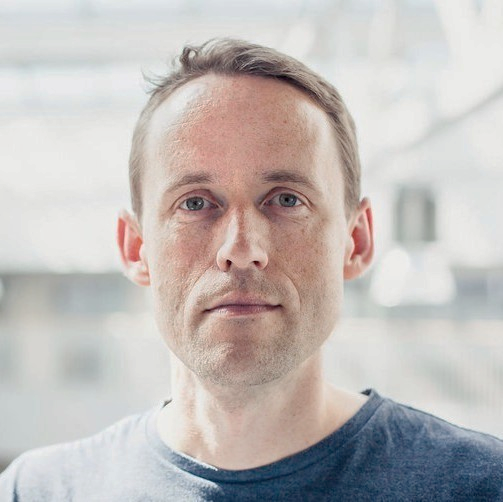
Jakob Pagter
Jakob Pagter – VP of Engineering, Wallet Security – Blockdaemon
Michael Bæksvang Østergaard
Michael Bæksvang Østergaard – Staff Engineer, Security – Blockdaemon
Thomas P. Jakobsen
Thomas P. Jakobsen – Senior Cryptography Engineer – Blockdaemon

Partners

Aarhus University logoBlockdaemon logo