Cold gel on the abdomen, a gentle press with the probe, and a beating heart appearing on the screen. An ultrasound scan may sound like a straightforward three-step process. In reality, it’s more complex. The quality of a fetal scan depends greatly on the operator’s experience and the expectant mother’s individual physiology. As a result, some pregnant women receive a more accurate assessment than others.
The FairFM research project seeks to eliminate this disparity. By developing AI technology that can detect and correct biases, the project aims to ensure that all pregnant women – regardless of background or biological differences – have equal access to early and accurate fetal diagnostics. The result is not only better data but also greater confidence and fairness in care.
Digital technology plays a vital role in enabling healthcare systems to deliver treatments of consistently high quality to all citizens. Through FairFM, DIREC supports an ambitious initiative that bridges research, industry, and public institutions, offering a scalable solution to a key societal challenge.
FairFM is developing AI technology to systematically identify and correct bias in medical imaging. The project builds on powerful foundation AI models trained on ultrasound images, with the goal of creating robust and fair systems that can deliver accurate results for all pregnant women – regardless of the operator’s experience or the patient’s physiology
This effort brings together leading partners from DTU, the University of Copenhagen, Rigshospitalet, and the AI startup Prenaital in a committed collaboration. Working side by side, they combine clinical innovation with cutting-edge technological research, accelerating the path from development to real-world implementation.
Beyond improving current practice, FairFM aims to ensure transparency and accountability in AI-driven decisions – building trust in the technology among both clinicians and patients.
![]() |
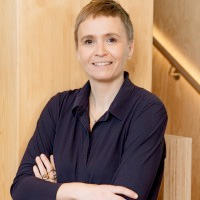
Aasa Feragen – Professor – Technical University of Denmark
|

![]() |
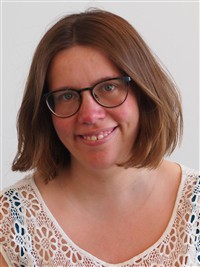
Mads Nielsen – Professor – University of Copenhagen
|
![]() |
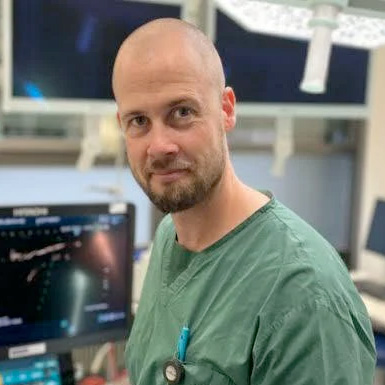
Martin Tolsgaard – Professor in Obstretics and Fetal Medicine Specialist – Rigshospitalet
|
![]() |
Tanja Danner – CEO – Prenaital
|



From our point of view, a successful project results in software that we can use in our development and deployment process to detect, understand and mitigate performance disparities before our products are deployed in the clinic. A second relevant outcome would be a mechanism for flagging predictions with high probability of errors, either to inform the users or abstain from returning the associated recommendations – as a potential safeguard in our AI assistants.
Tanja Danner
CEO
Prenaital ApS
This project addresses a crucial challenge for our research on AI driven ultrasound screening: Robustness and fairness across demographic and clinical subgroups. It is well known that while AI models perform well on the datasets and subgroups that they are trained on, they often struggle to generalize to patient groups, scanners or other factors that are not prevalent in their training datasets. AI will only be a success in the clinic if clinicians and patients trust it to treat all patients fairly. We therefore strongly welcome this project, which aims to automatically detect and, if possible, mitigate performance disparities across any groups.
Martin Grønnebæk Tolsgaard
MD, PhD, DMSc, Professor, Fetal Medicine Consultant.
Department of Obstetrics, Copenhagen University Hospital, Rigshospitalet