
DIREC project

MOTUS: Safe and Responsible Co-bots in Healthcare and Industry

Project impact

In just a few years, co-bots have become trusted companions in both hospital corridors and on factory floors. They are capable of performing tasks ranging from assembling electronic components to carrying out ultrasound scans for patients with arthritis. In the same time span, we have also seen an explosion in AI development. AI is now not just something in researchers’ imaginations, but an assistant that can help you write an e-mail or write a food recipe just by looking at a picture of the final dish. Because of this, many researchers are working on bringing advanced AI capabilities to co-bots. However, AI is often unaware of its own mistakes. When the AI is simply ChatGPT writing an e-mail, at worst, its mistake will mean that e-mail makes no sense. But if the AI controls a co-bot, its malfunction can injure workers or destroy the robot’s surroundings. 

MOTUS brings together SDU and ITU in close collaboration with Danish industry pioneers such as Universal Robots, Danfoss, and ROPCA. Together, they aim to develop new methods to ensure that AI-powered co-bots working in a factory or hospital will be safe, by making them aware of their own mistakes.

The project aligns closely with DIREC’s mission to foster digital research that is responsible, applicable, and socially relevant. MOTUS combines cutting-edge research with practical, cross-disciplinary solutions. By supporting this initiative, DIREC strengthens Denmark’s leading role in developing safe AI technologies and demonstrates how digital research can be translated into innovation for society-critical functions.

PROJECT DATA

Project name
MOTUS: Monitoring and Testing of Uncertainty and Safety for Smart Co-bots
Project period
2025-2027
Funding
DKK 3,750,000

Scientific mission

MOTUS is developing AI tools to monitor, test, and validate the decisions made by co-bots. The objective is to measure and communicate uncertainty—both before and during a co-bot’s actions. Through advanced uncertainty quantification, out-of-distribution detection, and real-time monitoring, co-bots will gain the ability to recognize when they are operating in uncertain conditions, enabling them to pause their actions or involve a human operator. 

These technologies are designed to be accessible to non-specialists and easily integrated into existing solutions, such as Universal Robots’ AI Accelerator Kit, with a view toward broad industrial adoption.

Project Participants

Iñigo Iturrate
Iñigo Iturrate – Associate Professor – University of Southern Denmark
Andrzej Wąsowski
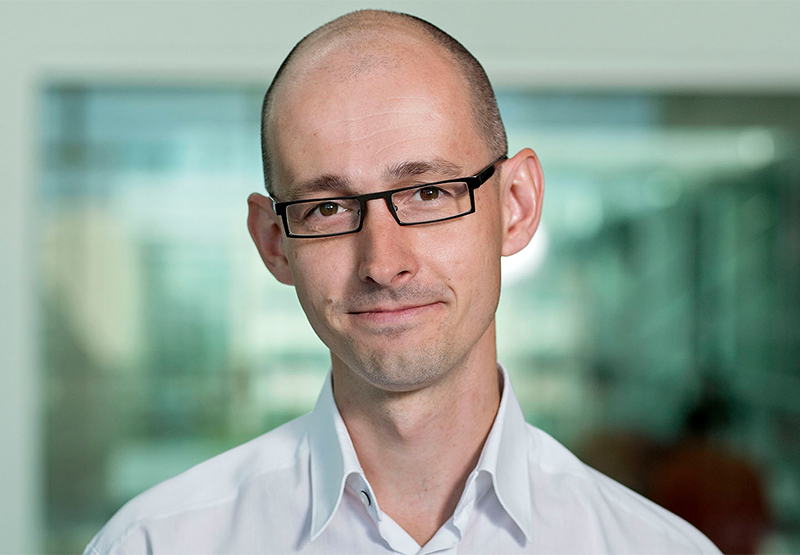
Andrzej Wąsowski – Professor – IT University Copenhagen
Mahsa Varshosaz
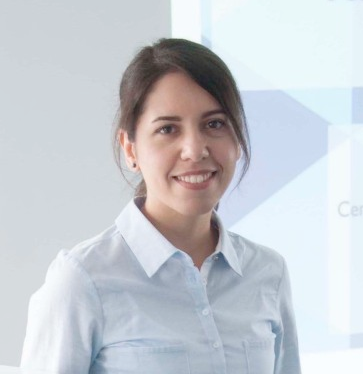
Mahsa Varshosaz – Associate Professor – IT University Copenhagen
Wilbert Peter Empleo
Wilbert Peter Empleo – Research Assistant – University of Southern Denmark
Brian Svendsen
Brian Svendsen – Head of Global Supply Chain Technology – Danfoss Drives
Johannes Schäferhoff
Johannes Schäferhoff – CEO – ROPCA

Partners

IT University Copenhagen logoUniversity of Southern Denmark logoUniversal Robots logoDanfoss Drives logoROPCA logo

Our two main produets are ARTHUR, a robot for autonomous ultrasound (US) scanning of the patients’ hand joints, and DIANA, an AI software assistant for evaluating and monitoring disease activity based on US images. Both produets are for the medical market, so they must comply with the EU Medical Device Regulation, which places strong requirements on safety. We are interested in this project because technologies that can make AI and robots safer would allow us to expand the range of features in our produets, while keeping medical device compliance.

Johannes Schäferhoff
CEO
ROPCA

We have focus on faster deployments of robots. AI solutions can make robots easier to program, but it is difficult to predict how robust they will be in practice. Here safe and understandable Al based robot control can be very beneficial. The best-case scenario is that research and development within the field is advanced significantly, so Danfoss Drives can in the future make use of this technology for faster robot deployment.

Brian Svendsen
Head of Technology, Platforms and Architecture
Danfoss Drives