The research project united 15 companies to tackle a shared challenge — now they reveal the key to successful academia–industry collaboration
Many research initiatives struggle to gain access to the private sector. However, the ReWork project has developed a model that appeals to both global industrial leaders and niche companies alike. Its approach combines strong real-world relevance, strategic relationship-building, and researchers who are willing to challenge how companies understand themselves.
When the world reopened after the pandemic, Danish companies were confronted with an urgent issue. Hybrid work was here to stay, but no one knew how to sustain company culture and productivity when employees were joining meetings from home.
This challenge became the starting point for the ReWork project, which succeeded in bringing together 15 companies, including major players such as Arla, Grundfos, and Bankdata. All of them saw the value in developing better solutions for hybrid work.
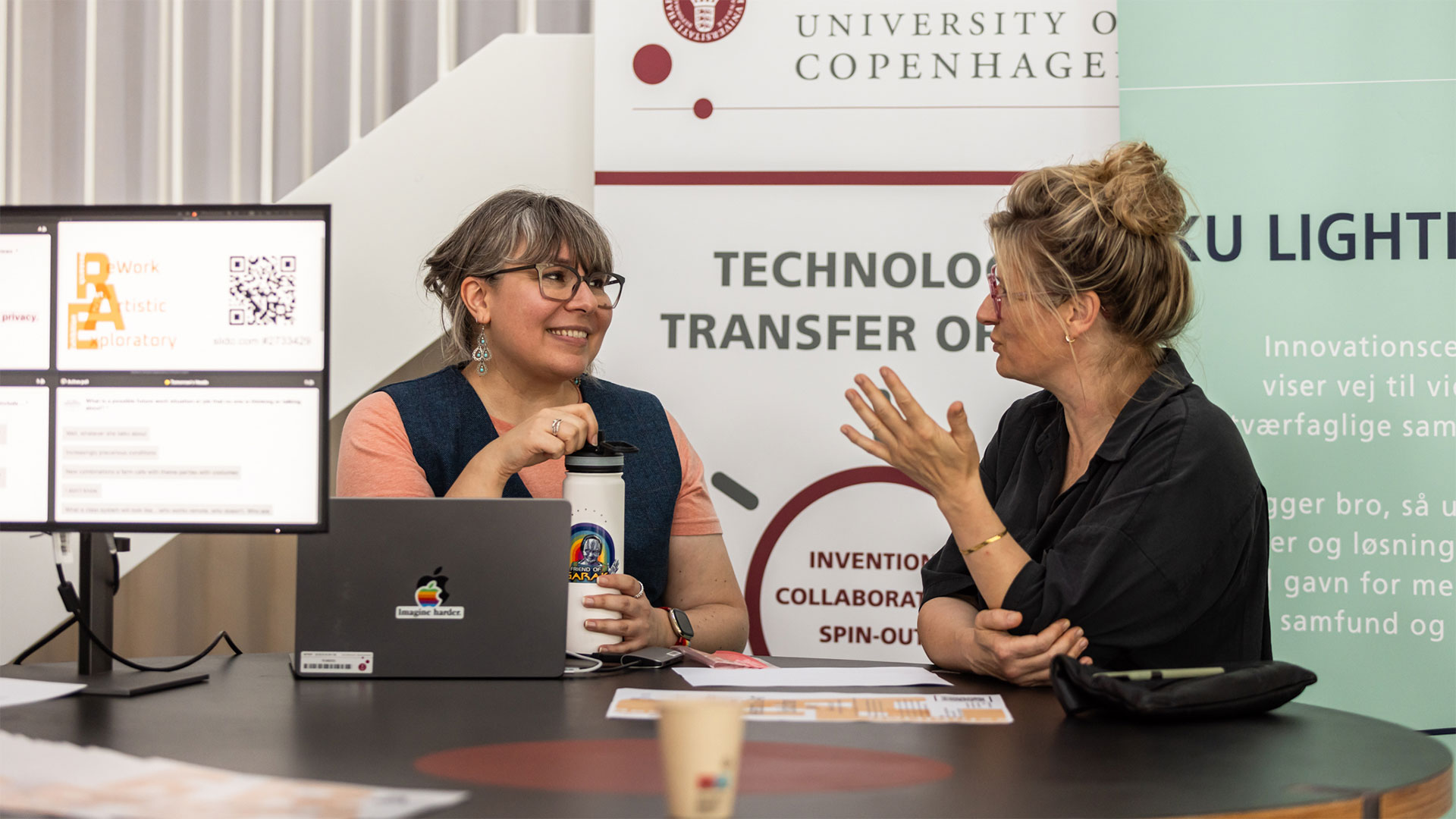
“Companies were struggling to find the right support for hybrid working. They faced a problem that required a solution, but lacked the internal resources to conduct research at the scale we could provide,” explains Eve Hoggan, project lead and Associate Professor at the Department of Computer Science at Aarhus University.
DIREC opened the door to industry
Even strong intentions can fall short without the right connections. That is why it was essential for Eve Hoggan and her team to establish the right relationships from the outset. Here, DIREC played a crucial role in professionalizing access to industry and enabling the right networks.
“DIREC was able to connect us with the key decision-makers in companies. It gave us a completely different level of access than we had before. That was invaluable,” says Eve Hoggan.
The first year was therefore dedicated to building relationships and developing a shared understanding of language and needs. Although this required significant effort, it created a strong pull effect, with companies now approaching the project themselves. The initiative grew so rapidly that the team eventually had to decline new interested partners.
“It takes persistence and a lot of work to figure out how to communicate effectively with each other. But once those relationships were established, everything started to flow, and companies began reaching out unexpectedly,” says Eve Hoggan.
Eve Hoggan, project lead and Associate Professor at the Dept. of Computer Science at Aarhus University
Two months as a fly on the wall transformed eventSPACE’s business
Successful collaboration is not only about knowing the right people. It also requires engaging with topics that companies believe can directly improve their business performance. This was the case for partner company eventSPACE, which designs hybrid event experiences.
“ReWork was an exciting opportunity to shed light on a part of our business that we actually rely on commercially. At the same time, we have a global team that depends on effective communication. It forced us to step outside ourselves and look inward from an external perspective, which has given us a much clearer direction for what effective hybrid work really means,” says Harry Banks, General Manager and Executive Producer at eventSPACE.
The company agreed to let PhD student Juliane Brigitta Busboom from Roskilde University observe their work for two months—acting as a fly on the wall and conducting interviews several times a week. According to Harry Banks, this collaboration pushed them to rethink their own practices:
“The collaboration opened our eyes to what customers actually want. For instance, we have stopped using expensive VR headsets at events. Instead, we now use video solutions that prioritise direct eye contact, because Juliane showed us that this is far more effective for creating human connection,” he explains.
At the same time, eventSPACE participated in ReWork’s workshops, which brought together all commercial partners in the project. This created a forum where they could contribute their expertise alongside major industry players.
“We felt very privileged in those workshops. We were sitting in meetings with industry giants like Arla and Grundfos. Being able to share our insights alongside companies of that scale has been incredible. It feels meaningful to be part of the solution,” says Harry Banks.
Research becomes a driver of Danish competitiveness
Today, ReWork stands as a strong example of DIREC’s vision to connect deep academic expertise with the execution power of industry. According to Managing Director Thomas Riisgaard Hansen, the project demonstrates how research can become a catalyst for digital competitiveness when the right conditions are in place.
“Through the ReWork project, we have shown how researchers and companies can work closely together to address complex societal challenges. It demonstrates that when deep academic insight is combined with practical business needs, it creates both innovation and a lasting bridge between two worlds, strengthening Denmark’s digital competitiveness,” he concludes.
Eve Hoggan’s three recommendations for successful industry collaboration
Strategic matchmaking: Use intermediary organisations to connect directly with the right industry stakeholders.
Mutual value: Ensure the project addresses a real and current problem, and delivers insights and relationships that companies can apply in their daily operations.
A shared language: Invest time in building relationships and understanding company needs before beginning data collection.
About the rework project
Home and hybrid work is here to stay, but what should these work methods look like in the future? Should we simply try to improve what we already have, or can we take a bolder approach and design a different kind of future in the workplace? In collaboration with several companies, this project seeks a future vision that integrates experiences around hybrid work.