22 December 2025
The number of satellites is rising explosively, while security measure lag far behind. A new research initiative brings together DTU, the Alexandra Institute, FORCE Technology, and GomSpace to develop a digital shield capable of protecting satellites from cyberattacks.
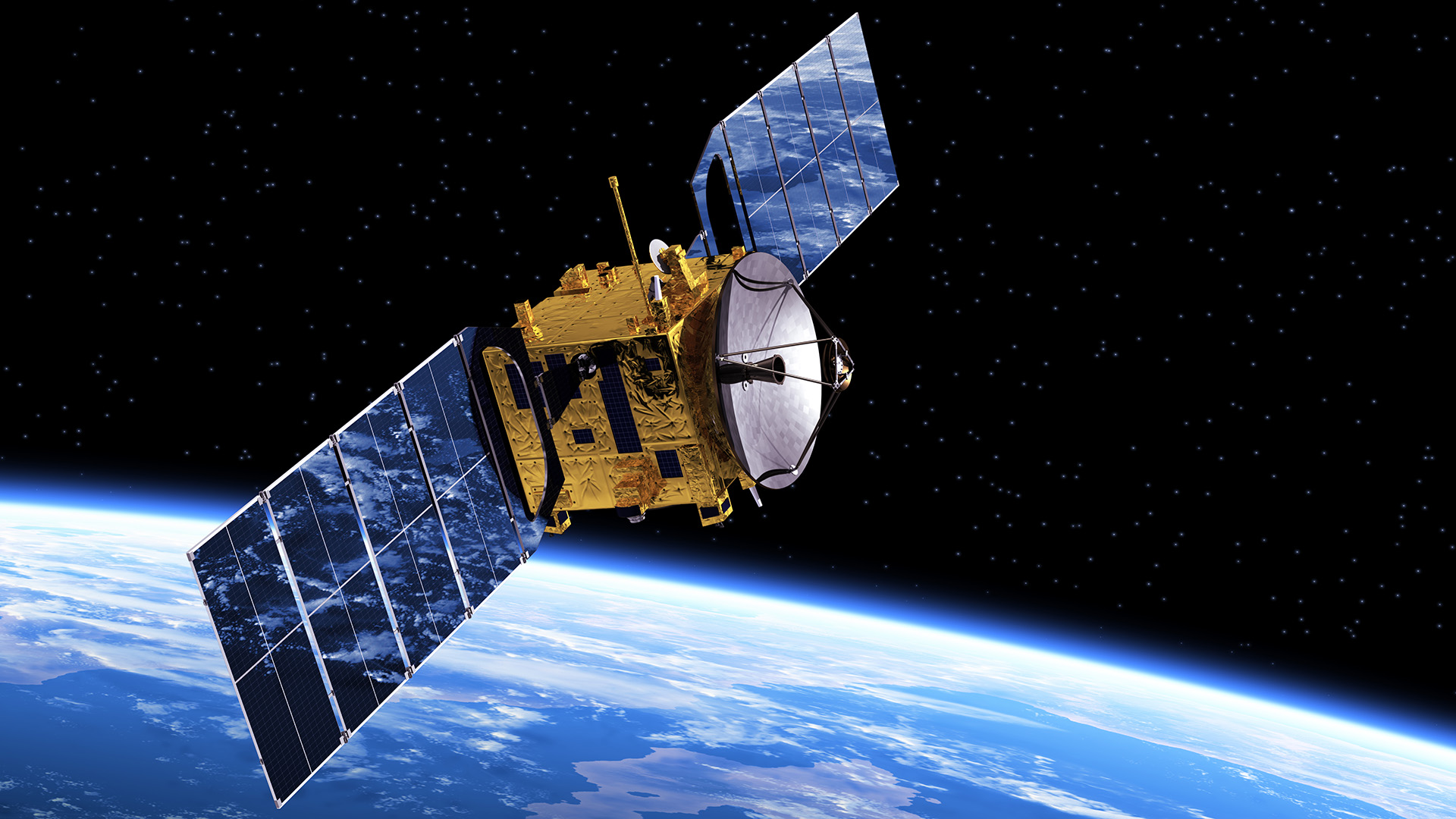
Imagine a day when 5G networks or GPS signals suddenly become unreliable. Navigation systems fail. Supply chains grind to a halt. Even financial systems are affected. The root cause can be traced back to a single vulnerable point: satellites.
‘There are currently around 10,000 satellites in space – three times as many as in 2020 – and growth shows no sign of slowing. By 2030, an estimated 60,000 satellites will be orbiting the Earth. At the same time, the global market for space security is expected to grow by approximately 50 percent, reaching DKK 45 billion.
Satellites play a vital role in defense and communications, but they are equally essential for climate monitoring, agriculture, construction, and transportation. Denmark is among the countries increasing its investments in space. In October, the Danish government proposed allocating DKK 2.7 billion between 2026 and 2029 for long-term space research and technology development. However, one critical challenge remains: security.
“Space infrastructure evolved during a period of relative peace, which has left security at a low level. Today, we are in the middle of a race, yet security is rarely built in from the start. That is why close collaboration between research institutions and industry is essential if we are to strengthen the security of our satellites,” says Christian Kloch, Technology Lead at FORCE Technology and project manager of the DIPS in Space research project, which focuses specifically on satellite cybersecurity.
According to a report from the Danish Agency for Societal Security, there is a “very high risk” of cyber espionage and cybercrime targeting Denmark’s space sector. This is where DIPS in Space comes in. With funding from the Danish Industry Foundation through DIREC, the National Defence Technology Center, and Security Tech Space, FORCE Technology, DTU, the Alexandra Institute, and GomSpace have joined forces to develop a digital shield for satellites—a so-called DIPS (Detection, Intrusion and Prevention System).
The solution will rely on an AI model capable of detecting anomalous patterns in satellite data streams, isolating threats, and preventing data breaches and system failures.
The project also has strategic importance for Denmark. A recent report from the Danish Institute for International Studies (DIIS) notes that Denmark is the only Arctic state without its own satellites dedicated to Arctic operations. This increases dependence on foreign systems and makes robust cybersecurity a critical requirement for future Danish satellite missions.
A key partner in DIPS in Space is the Danish satellite company GomSpace, which is providing its commercial satellite platform for the project. The ambition is to integrate the AI-based security solution directly into GomSpace’s satellites, which are exported to more than 60 countries worldwide.
“The Danish space industry is in a strong position, but cybersecurity will be one of the decisive factors in future competition. If Denmark can establish itself as a European leader in this area, the benefits will be significant—both in terms of security and commercial value. Achieving this requires close collaboration,” says Lars Krogh Alminde of GomSpace. He adds:
“In a small country like Denmark, cooperation is essential. It allows us to access cutting-edge knowledge and the strongest talent in the field.”
DIPS in Space is supported with DKK 2 million through DIREC’s Next Generation Cyber Security initiative, which brings together leading Danish researchers and companies to promote knowledge sharing, collaboration, and competitiveness.
“Denmark is one of the world’s most digitalised countries, yet we develop far too few of the cybersecurity solutions we rely on ourselves. With this project, we are planting the first seed for a stronger security presence in space—one that we hope will grow significantly in the years ahead,” says Thomas Riisgaard Hansen, CEO of DIREC.
For more information about DIPS in Space, read about the project here. You can also find further details on DIREC’s efforts to strengthen Danish cybersecurity here.
Since 1999, Denmark has launched approximately 14 satellites, primarily small research missions led by DTU and Aalborg University. The first and most well-known, the Ørsted satellite, is still delivering data on Earth’s magnetic field. In recent years, commercial and strategic missions have followed, including Sternula-1 for maritime communications and the Danish-Swedish Bifrost satellite for Arctic surveillance. While Denmark’s space capabilities are growing, they remain modest compared to neighboring countries — making security and resilience particularly important.